Lighting - opinions needed

To many ads? Support ODJT and see no ads!

rickryan.com

Mac Daddy DJ
ODJT Supporter
Dec 9, 2009
20,046
18,426
62
Hendersonville, TN
www.rickryan.com
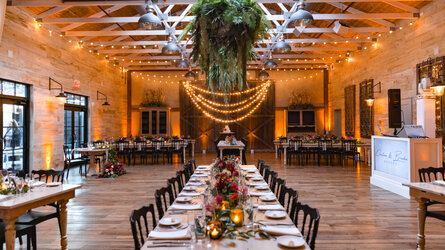
Been doing some lighting changes and ever since Taso said that I had too many lights, I decided to try one without the downlighting. I have white string lights on all the trusses, 5 chandeliers and am in the process of installing vertical curtain lights behind the sheer drapes over the walls. Even before Taso said what he did, I was already questioning myself on whether all the color and sound active lighting was too much. To me, this feels a lot softer and more elegant. The chandeliers get dimmed down for dance and I have 6 movers for dance lighting. Might add a few moving washes. What do you guys think?

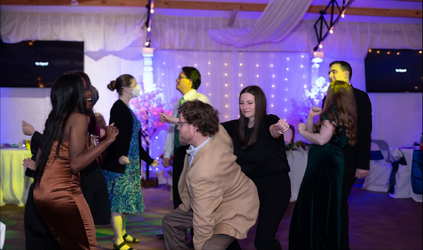
Before
1741009794624.png
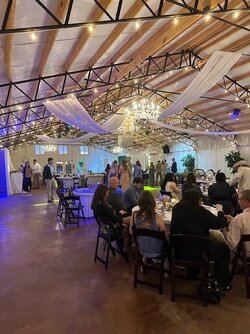
After
IMG_5141.jpg
 
Been doing some lighting changes and ever since Taso said that I had too many lights, I decided to try one without the downlighting. I have white string lights on all the trusses, 5 chandeliers and am in the process of installing vertical curtain lights behind the sheer drapes over the walls. Even before Taso said what he did, I was already questioning myself on whether all the color and sound active lighting was too much. To me, this feels a lot softer and more elegant. The chandeliers get dimmed down for dance and I have 6 movers for dance lighting. Might add a few moving washes. What do you guys think?

Before
View attachment 55894
After
View attachment 55895
so the two photos you shared are not fair representations. The before is a dancefloor atmosphere, where it actually does look appropriate. The after is a non dancing environment, during the daytime, which while the venue looks more elegant bc it's cleaner in terms of color, what then happens during the dancing. If the after is in fact during a dancing segment, then I'd say the atmosphere doesn't look right as its too bright.

It's not about what is on vs what isn't on. It's about how you control it, and until you take those steps to enhance the controllability of your fixtures, at the very least for certain moments, then you're never gonna ge thte results you look for. Ideally you should have moments with your movers programmed for:

- guests entering
- dinner
- door spot
- first dance
- toasts
- cake cutting

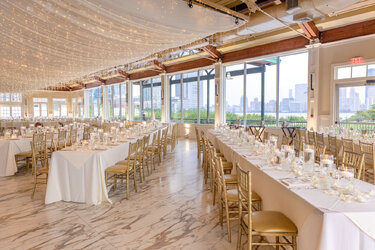
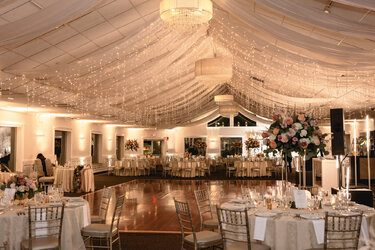
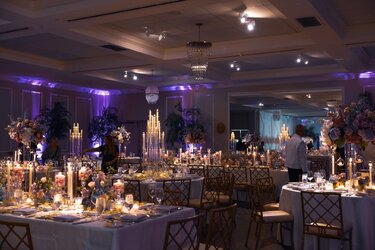
Your uplights should also have a number of colors, including shades of colors. During dancing, lights should go based on atmosphere (NOT BEAT). Ideally what I think you're trying to achieve, at least during the non dancing segments is something like these color tones in the pics below. These are actually 3 or 4 different shades I've created for those elegant, neutral seeking couples.

Of course some still want a purple or pink or blue if going for something very specific, such as the last pic attached which creates a more dramatic look with all the lights off but the pin-spotting and a purple in the back to add depth and pops of color instead of being pitch black (and if you do a neutral it would be too bright and defeat the purpose of pin spotting).
1741025514881.jpeg1741025525455.jpeg1741025536860.jpeg1741025553885.jpeg1741025574963.jpeg1741025602220.jpeg
1741025792665.jpeg
 
I think you should separate the venue (architectural space) and the entertainment (novelty lighting) and solve one before you move onto the other.

For example, if black is a color you are going to keep for the interior, then respect it. You have black chairs and back trusses - with white cables attached? The string lighting should have been black wires. Lose the extension cords and install permanent discreet electrical power where it is needed.

It may seem like a small thing, and by itself it would, but you are several layers deep now with a myriad of unrelated and conflicting touches. You've got a few pieces of voile on the ceiling, but it seems non-committal at best. Just master one thing at a time and stay conscious of having a coordinated design.

As for the ceiling - I do a lot of large tents, and the ceiling is the thing we have to deal with. My advice generally is that we go all or nothing. If we don't completely cover it, then we don't put anything there to draw your attention to it. If the ceiling is not attractive don't try to dress it up unless you can make it 100% something else.

The black truss and wood are amenable to something softer and more familiar - I would want to give the truss a floral solution and give the bottom rails/lights a softer more wedding appropriate feel. (I would consult someone who can help you achieve this, it takes a special kind of talent but it's worth it.) A better positioning of the chandeliers would then add a more convincing elegance.

When you think lighting start with maintaining the space design - focus on warmth, and illumination. Point sources are a secondary touch. DJ lighting is irrelevant because we are trying to book the space - not the DJ. (Deal with that later on a case-by-case basis.) Remember that every venue you have been a DJ at was first sold and booked on the basis of the room - not the DJ or band they hired. All of the photos you use to promote the space should be lit for the best room appearance NOT the entertainment. The "party" isn't the thing you should be selling because it's a given. It's location, location, location, and that holds true both indoors and out.

 
I think you should separate the venue (architectural space) and the entertainment (novelty lighting) and solve one before you move onto the other.

For example, if black is a color you are going to keep for the interior, then respect it. You have black chairs and back trusses - with white cables attached? The string lighting should have been black wires. Lose the extension cords and install permanent discreet electrical power where it is needed.

It may seem like a small thing, and by itself it would, but you are several layers deep now with a myriad of unrelated and conflicting touches. You've got a few pieces of voile on the ceiling, but it seems non-committal at best. Just master one thing at a time and stay conscious of having a coordinated design.

As for the ceiling - I do a lot of large tents, and the ceiling is the thing we have to deal with. My advice generally is that we go all or nothing. If we don't completely cover it, then we don't put anything there to draw your attention to it. If the ceiling is not attractive don't try to dress it up unless you can make it 100% something else.

The black truss and wood are amenable to something softer and more familiar - I would want to give the truss a floral solution and give the bottom rails/lights a softer more wedding appropriate feel. (I would consult someone who can help you achieve this, it takes a special kind of talent but it's worth it.) A better positioning of the chandeliers would then add a more convincing elegance.

When you think lighting start with maintaining the space design - focus on warmth, and illumination. Point sources are a secondary touch. DJ lighting is irrelevant because we are trying to book the space - not the DJ. (Deal with that later on a case-by-case basis.) Remember that every venue you have been a DJ at was first sold and booked on the basis of the room - not the DJ or band they hired. All of the photos you use to promote the space should be lit for the best room appearance NOT the entertainment. The "party" isn't the thing you should be selling because it's a given. It's location, location, location, and that holds true both indoors and out.

Rick, there's a lot of truth to this. Focus on your event space first... perfect it. In the 4 of the photos I shared, the venues have similar roof forms to what you have. However, theirs for some reason just look well put together, clean, aesthetically pleasing on its own. Then tie in everything else accordingly. Venues here that have moving heads in the ceiling for example will pay to have the plastic covers painted in the same exact color... not black or white... but the same exact ceiling color to blend in perfectly. When venues show lighting here, NONE show the dancing lights... they all focus on the static looks of when the guests enter or the first dance.
 
Bob makes a great point about the mess of extension cords overhead. It looks hastily thrown together, cheap and very temporary. We always throw shade on DJs that don't manage their cables and this is no different. A potential bride may not walk in and call this out as THE problem, but it is certainly going to give off a negative impression.
 
Thanks guys. I agree on the messy wires and will work on that. For now, I think I am going to ditch the downlights and will be adding curtain lights around the wall spaces. I have a couple of months until the next wedding in May.
Curtain lights as in more string lights? Unless trying to draw attention to a certain focal point, you’re just making things look busier. More stuff doesn’t necessarily mean nicer looking. Down lights can be extremely effective with the right color tones that compliment the aesthetic
 
Curtain lights as in more string lights? Unless trying to draw attention to a certain focal point, you’re just making things look busier. More stuff doesn’t necessarily mean nicer looking. Down lights can be extremely effective with the right color tones that compliment the aesthetic

The downlights seem a bit too bright for the space and when I put them in sound active mode, it's too flashy/busy. The curtain lights, which are behind wall sheers, are very subtle. I'll keep your comment in mind and may re-evaluate it but I think that at this point they work very well with the string lights that are run along the trusses overhead. Let me put in a few more sections and post some pics. I'd be happy to discuss it with you guys further. Thanks for your input.
 
  • Like
Reactions: ittigger
The downlights seem a bit too bright for the space and when I put them in sound active mode, it's too flashy/busy. The curtain lights, which are behind wall sheers, are very subtle. I'll keep your comment in mind and may re-evaluate it but I think that at this point they work very well with the string lights that are run along the trusses overhead. Let me put in a few more sections and post some pics. I'd be happy to discuss it with you guys further. Thanks for your input.
Hence why i said programming is the key to any quality lighting presentation and addition.
 
The "presentation" you need is the room itself - not the lights. What is the impression in broad daylight when I first walk through the door? You have two opposing priorities here:

DJs - who want the room to be dark
Brides/Guests - who want to be seen and present in a space that's warm and elegant,

Only the second one will make you more money.

We can find a dark space anywhere and throw some DJ lighting into it, (Check out any Frat House on any campus.)
Design a room that makes me feel special just to be in it. For that, the lighting is architectural not a novelty or DJ product,

Right now, you seem to still be treating the place as just a roof to put over your DJ gigs. (You're focused on the wrong product,)
 
Hence why i said programming is the key to any quality lighting presentation and addition.

DJs - who want the room to be dark
Brides/Guests - who want to be seen and present in a space that's warm and elegant,

Both views are spot on.
Combine the two, and find a way to program your lights so the room is bright and inviting...
but make an area for the dance floor, that can be dimmed/darkened for dancing.
 
Both views are spot on.
Combine the two, and find a way to program your lights so the room is bright and inviting...
but make an area for the dance floor, that can be dimmed/darkened for dancing.

Exactly. Venues appearance on its own is priority. That’s the foundation to everything. Lighting comes second, but without control for various settings, it’s more of a negative than a positive.
 
  • Like
Reactions: ittigger and Ausumm
Both views are spot on.
Combine the two, and find a way to program your lights so the room is bright and inviting...
but make an area for the dance floor, that can be dimmed/darkened for dancing.

At this point, there is no "programming" and no DMX in use. I had the downlights connected via DMX to my Blackbird controller but since it fritzed I haven't replaced it. The way things are wired currently, the string lights across the trusses stay on constantly. The chandeliers are all on the same circuit with a dimmer. I start the evening with the chandeliers about half up. Plenty of light but not overly bright. The center floor is spotlighted. The head table is also spotlighted.

I start the evening with the whole room fairly lit and the head table lit up. After dinner (1st dance), I dim down the entire room and kick on the center floor spotlight. After the special dances I'll start the first full dance set. At this point the chandeliers are brought down to barely on. The room is dark but not overly dark. The rope lights give it a nice feel. I then kick on the movers (all on the same circuit).

I do have plans to eventually put in full DMX control but frankly I have other priorities that are ahead of it. Lots of priorities.
 
At this point, there is no "programming" and no DMX in use. I had the downlights connected via DMX to my Blackbird controller but since it fritzed I haven't replaced it. The way things are wired currently, the string lights across the trusses stay on constantly. The chandeliers are all on the same circuit with a dimmer. I start the evening with the chandeliers about half up. Plenty of light but not overly bright. The center floor is spotlighted. The head table is also spotlighted.

I start the evening with the whole room fairly lit and the head table lit up. After dinner (1st dance), I dim down the entire room and kick on the center floor spotlight. After the special dances I'll start the first full dance set. At this point the chandeliers are brought down to barely on. The room is dark but not overly dark. The rope lights give it a nice feel. I then kick on the movers (all on the same circuit).

I do have plans to eventually put in full DMX control but frankly I have other priorities that are ahead of it. Lots of priorities.
So do you have a pic of what the room looks like when the guests enter it for the first time after a ceremony?
 
  • Like
Reactions: ittigger
So do you have a pic of what the room looks like when the guests enter it for the first time after a ceremony?

I don't. All I can tell you, there's usually sunlight coming in during the first part of the reception. I also have the chandeliers at about 50%. I try for just a bit of a softer tone to the room. As the evening progresses, the house lights go down a bit more to create more of a party, club-like atmosphere.
 
  • Like
Reactions: ittigger
I don't. All I can tell you, there's usually sunlight coming in during the first part of the reception. I also have the chandeliers at about 50%. I try for just a bit of a softer tone to the room. As the evening progresses, the house lights go down a bit more to create more of a party, club-like atmosphere.
Is there a way to add curtains to minimize light from the outside for those seeking a more intimate atmosphere where candles or their decor really pops. For example that photo with the purple uplights that I posted, was in Florida at 430pm w full sunlight.
 
  • Like
Reactions: ittigger
Is there a way to add curtains to minimize light from the outside for those seeking a more intimate atmosphere where candles or their decor really pops. For example that photo with the purple uplights that I posted, was in Florida at 430pm w full sunlight.

I'm thinking of putting shades on the windows. In the evenings, the sun is coming in and directly hitting guests in their eyes. Good thought.
 
  • Like
Reactions: ittigger
You don't need DMX. Most of what you need for room lighting is architectural not entertainment,

There are also much better lighting options for the dancefloor within that space that don't require DMX. Why are you so obsessed with movers? They are so far down the list, and they are literally the biggest buck for the smallest bang (least versatile fixture given the space and layout.)
 
  • Like
Reactions: sonic-vision